Understanding Self Storage Contracts: What Every Renter Should Know
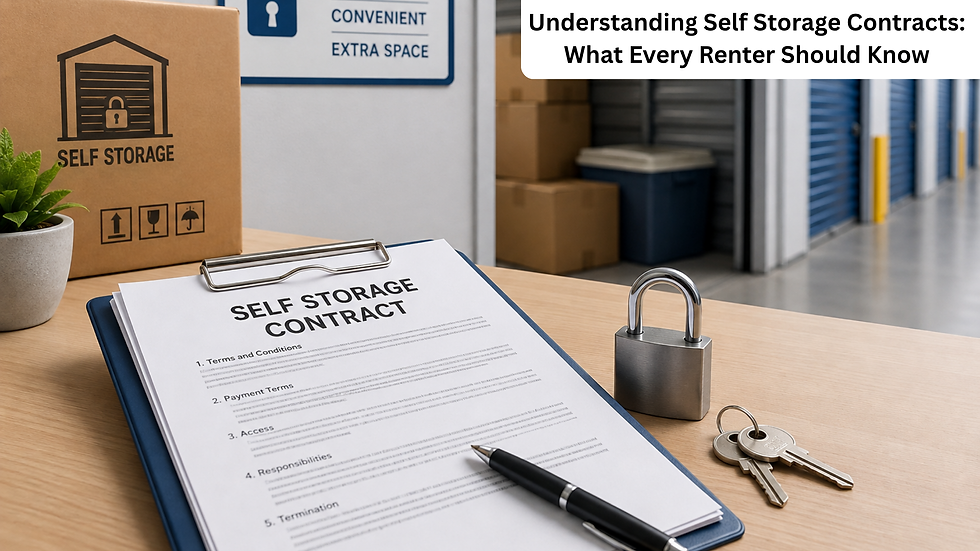
Whether you are a homeowner looking to renovate your space or a business owner relocating your offices, you have a major concern: finding a secure place to temporarily store valuables. Renting a self storage unit is one of the simplest ways to gain more space, whether you are relocating, downsizing, renovating, or storing your business inventory.
However, many people do not read their self-storage contracts when they lease a unit, and they only learn about hidden fees and access restrictions later. Saving unpleasant surprises later and spending a few minutes reviewing the agreement now could save you a few hundred dollars.
The self-storage industry continues to expand as more people choose flexible storage solutions. According to the Self Storage Association, there are more than 50,000 self-storage facilities across the United States, serving millions of customers every year. That is why understanding the contract before signing is more important than ever. This blog examines the importance of self-storage contracts and what every renter should know about them.
What Is a Self-Storage Contract?
A self-storage contract is a legal agreement between the storage facility and the renter. It explains the responsibilities of both parties and outlines how the rental agreement works throughout the lease period. A common self-storage rental agreement includes:
The cost to rent each month.
When you can access your unit.
Security policies.
When each payment is due.
Insurance requirements.
Policies for late payments.
The termination process.
You can better evaluate your options and what is involved in renting a unit for your belongings by carefully reading each section of the rental agreement.
Understand The Lease Duration
One of the first things you should review is the lease period. Many storage facilities offer more flexible leasing options, such as month-to-month rentals, while others offer a lower price point for longer-term rentals.
You should make sure that your storage unit lease agreement explains:
If the lease automatically renews.
Required notice before moving out
What do the lease terms say about early termination?
If there are any consequences to breaking the lease early.
Having this understanding helps you avoid paying for months when you do not need the unit.
Review Storage Rental Fees Carefully
The advertised monthly rental rate is not always the total amount you will pay.
A storage rental contract may also include additional charges such as:
Security deposits
Lock purchase fees
Insurance premiums
Late payment charges
Returned payment fees
Some facilities entice you with a monthly unit rental fee of $65, but you will incur a one-time administration fee, insurance, and the purchase of a lock at some point.
Ask for a complete breakdown of all costs before signing so you know exactly what to expect.
Learn The Payment Terms
Missed payments can accumulate costs very rapidly. Storage unit payment terms that are part of every contract specify:
Due date of monthly payments.
Methods of payment that are accepted.
Grace period duration.
Penalty fees for overdue payments.
Collection process.
Policies for auctioning unpaid storage units.
To reduce the risk of missed payment deadlines, many storage businesses offer automated payments.
Know What You Can and Cannot Store?
Every storage facility has rules about the types of items allowed in a unit. Your self-storage lease terms will usually prohibit storing:
Flammable liquids.
Explosives.
Firearms that are prohibited by law.
Illegal items.
Perishable food.
Animals.
Perishable food or uncovered food items.
Dangerous chemicals.
Violating these rules can result in your agreement being canceled and lead to legal issues. If you are planning to store unusual items, inquire with the storage company about your concerns before placing them in your unit.
Pay Attention To Insurance Requirements
Many renters assume the storage facility has insurance for everything in their unit. Most companies provide limited liability for stored items, if any at all. Your self-storage legal agreement will clarify your insurance options. Some facilities provide insurance plans.
Others offer third-party insurance options and will accept homeowners or renters insurance that covers off-site items. It is the main reason young adults are choosing self-storage more than ever for the added security of their valuables.
If you plan to store your valuable furniture, antiques, electronics, or business inventory, purchasing insurance is often a wise decision.
Understand Facility Regulations
No two self-storage facilities are the same. The rules for your self-storage facility may include:
The hours you can access the facility.
Authorized users.
How must you keep the unit clean?
What type of lock must you use?
How must you maintain the unit?
Parking regulations.
Vehicle storage.
Moving truck access.
Following these strict storage unit rules maintains a safe and organized environment for everyone using the facility.
Understand Your Rights as a Tenant
Understanding your rights helps you make better-informed decisions throughout your rental period. The majority of agreements explain important tenant rights in self-storage, such as the following:
Protection of your privacy.
Access to your rented storage unit.
Notice of rental price increase.
Advance notice of the auction of your belongings due to non-payment.
Procedures for resolving disputes.
It's important to check your local regulations, as there may be additional protections beyond state law.
The sections that cause the most disputes are usually late-payment policies, insurance coverage, and automatic renewals.
Watch For Automatic Renewals
Most renters don't pay attention to the renewal section of their rental agreement. Some contracts provide for monthly renewal until a notice is submitted to the landlord indicating the tenant's intention to vacate by the end of the rental period. Failing to provide the notice will keep you on the hook for the full additional rental period, even if you have already completely moved out of the unit.
Always check:
Notice requirements for moving out.
Standards for cleaning.
The final payment and when it is required.
The conditions for your deposit being refunded.
If you keep your contract, payment records, and moving out receipts, it can help with anything that may come up later.
Read The Fine Print Before Signing
Some of the most crucial details of any agreement can be found in the smallest sections. Make sure you understand the following:
Responsibility for damages.
Limitations on liability.
Restrictions on access to the facility.
Unit inspections.
Who will your emergency contacts be?
How can the locks be changed?
How much can your rental rate change?
If you have any questions regarding any part of the agreement, make sure you ask before you sign. A good storage provider will be happy to explain the terms of their contract.
Tips for Choosing The Right Storage Facility
Understanding the agreement is only one part of selecting the right storage solution. Choosing a reliable facility is just as important.
Look for facilities that offer:
Transparent pricing with no hidden fees.
Flexible rental terms.
Robust security features.
Clean and well-maintained facilities.
Excellent customer reviews.
Good access hours.
Great employees.
Taking the time to compare a variety of storage rental choices can help you find the best combination of security, price, convenience, and service before you make a final selection.
Stay Safe By Reading Before You Sign For A Better Storage Experience
Signing a storage agreement should never be a rushed decision.
Reviewing your storage agreement for just a few minutes today may prevent expensive surprises, help you protect your valuable belongings, and give you a clear understanding of the terms and conditions of the storage provider before you start moving your belongings into the storage unit.
Understanding the contract for one of the many storage rental units protects your belongings and your peace of mind. If you want cheap storage units in Corpus Christi, choose a trustworthy, honest facility with clear contract terms. This can make your storage experience safe and simple without any added stress.


Comments